How Schools Can Protect Students on Poor-Air Days
Learn how schools can protect children from air pollution by monitoring AQI, adjusting outdoor activities, and improving classroom air quality.
In this article
Understand first
Three things this evidence means for you
- 1Monitor air quality daily Schools should check local AQI before classes and adjust activities when pollution levels become unhealthy.
- 2Reduce students' exposure Modify outdoor activities, improve classroom air quality, and take additional precautions for vulnerable students.
- 3Build awareness and preparedness Teach students how to understand air-quality data and establish a simple school-wide response plan.
Introduction: Why Air Quality Matters for Students
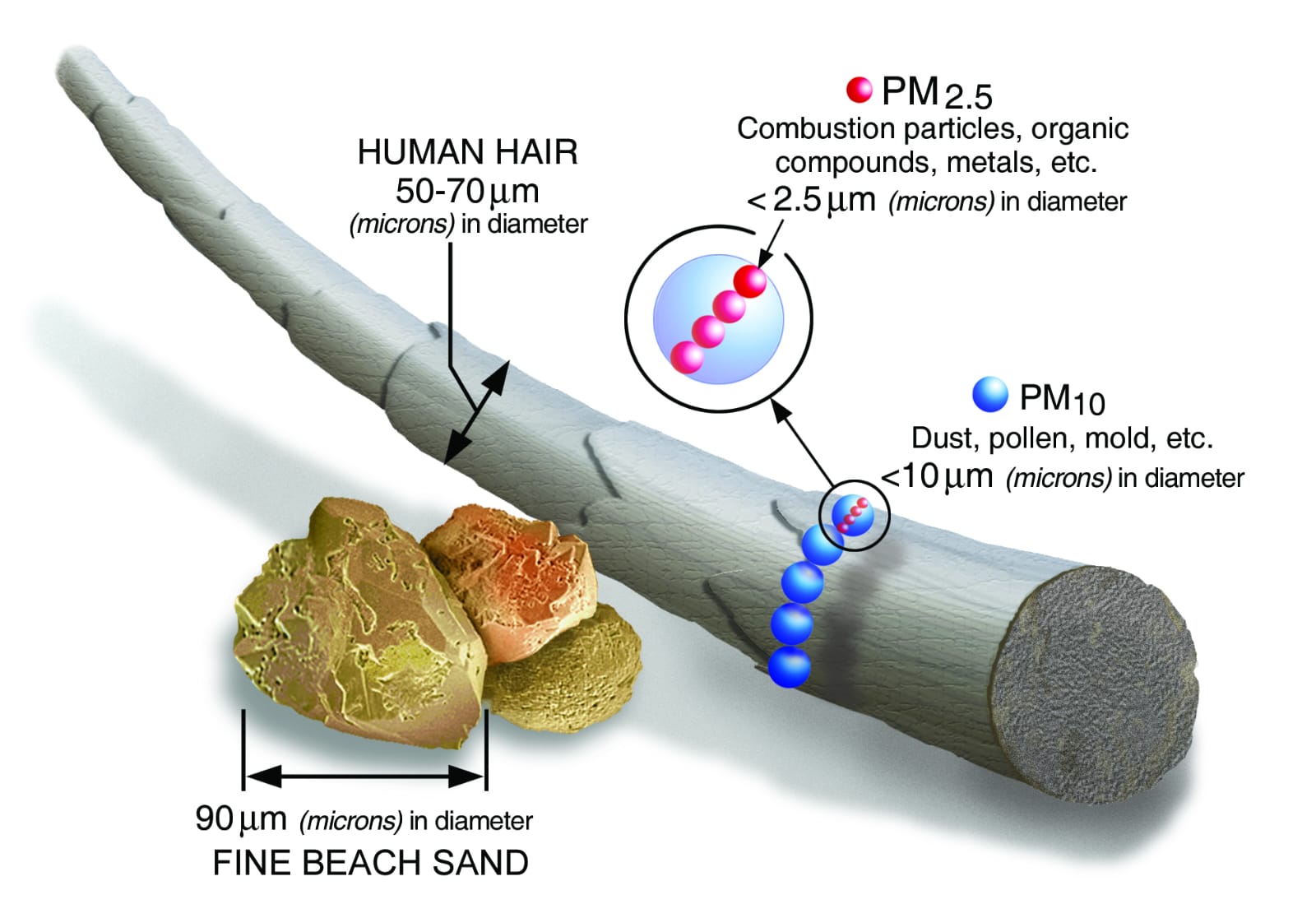
Every day, millions of children attend school without knowing the quality of the air they breathe. In cities across Nepal and South Asia, air pollution can reach unhealthy levels, exposing students to harmful pollutants such as PM2.5.
Children are especially vulnerable because their lungs are still developing, and they inhale more air relative to their body weight than adults.
While schools cannot control outdoor pollution, they can take practical steps to reduce exposure and create healthier learning environments.
1. Check Air Quality Before the School Day Begins
Just as schools check the weather before planning outdoor activities, they should also check the Air Quality Index (AQI).
AQI helps translate pollution measurements into information that teachers and administrators can understand and act upon.
Schools can use platforms like VayuDrishti to monitor air quality, identify pollution episodes, and make informed decisions about student activities.
Establishing a simple daily AQI-checking routine can make air-quality awareness part of school operations.
2. Adjust Outdoor Activities Based on AQI
Outdoor exercise increases breathing rates, potentially increasing children's exposure to harmful pollutants.
Schools should adapt physical education classes, sports competitions, and outdoor assemblies when pollution levels become unhealthy.
For example, under the US EPA AQI system:
- 0–100: Normal outdoor activities are generally appropriate, with precautions for unusually sensitive students.
- 101–150: Consider reducing prolonged or intense activities for sensitive students.
- 151–200: Reduce outdoor exertion and consider moving activities indoors.
- 201–300: Move outdoor activities indoors or reschedule them.
- Above 300: Avoid outdoor activities and follow public-health advisories.
These are general guidelines, and schools should follow applicable local health recommendations.
3. Make Classrooms Safer During Pollution Episodes
Indoor environments are not automatically free from pollution. Outdoor particles can enter classrooms through windows, doors, and ventilation systems.
Schools can reduce exposure by closing windows when outdoor pollution is severe, using suitable air filtration where available, and limiting indoor pollution sources.
Proper ventilation remains important. Schools should balance fresh-air requirements with outdoor pollution conditions rather than keeping classrooms sealed continuously.
4. Give Extra Attention to Vulnerable Students
Students with asthma and other respiratory conditions may face greater health risks during pollution episodes.
Teachers should recognize warning signs such as coughing, wheezing, chest tightness, and breathing difficulties.
Schools should work with families to establish individual health plans, adjust physical activities when necessary, and ensure students can access appropriate medical assistance.
5. Teach Students to Understand the Air They Breathe
Air-quality education helps students become informed participants in protecting their own health and their communities.
Teachers can introduce activities such as tracking AQI readings, comparing pollution levels on different days, and discussing local sources of air pollution.
Through VayuSena, VayuDrishti's environmental education initiative, we have reached over 6,000 students, helping young people better understand air pollution and environmental information.
When students learn to interpret environmental data, they can share that knowledge with their families and communities.
6. Create a Simple School Air Quality Action Plan
Schools can create a practical response plan built around five actions:
- Monitor local AQI every school day.
- Establish pollution thresholds for modifying outdoor activities.
- Improve indoor conditions and support vulnerable students.
- Communicate air-quality advisories to teachers and parents.
- Educate students about pollution and exposure reduction.
Assigning responsibility to a staff member and reviewing the plan regularly can help ensure these actions are implemented consistently.
Conclusion: Building Schools That Are Ready for Poor-Air Days
Air pollution is a challenge that extends far beyond school boundaries, but schools have an important role in protecting children from unnecessary exposure.
By combining accessible environmental information, practical precautions, and student education, schools can create healthier and safer learning environments.
Every child deserves clean air to learn, play, and grow.
At VayuDrishti, we believe environmental data should help people make better everyday decisions.
Explore air-quality information at vayudrishti.com.
Local context
How a School in Kathmandu Can Respond to a Poor-Air Day
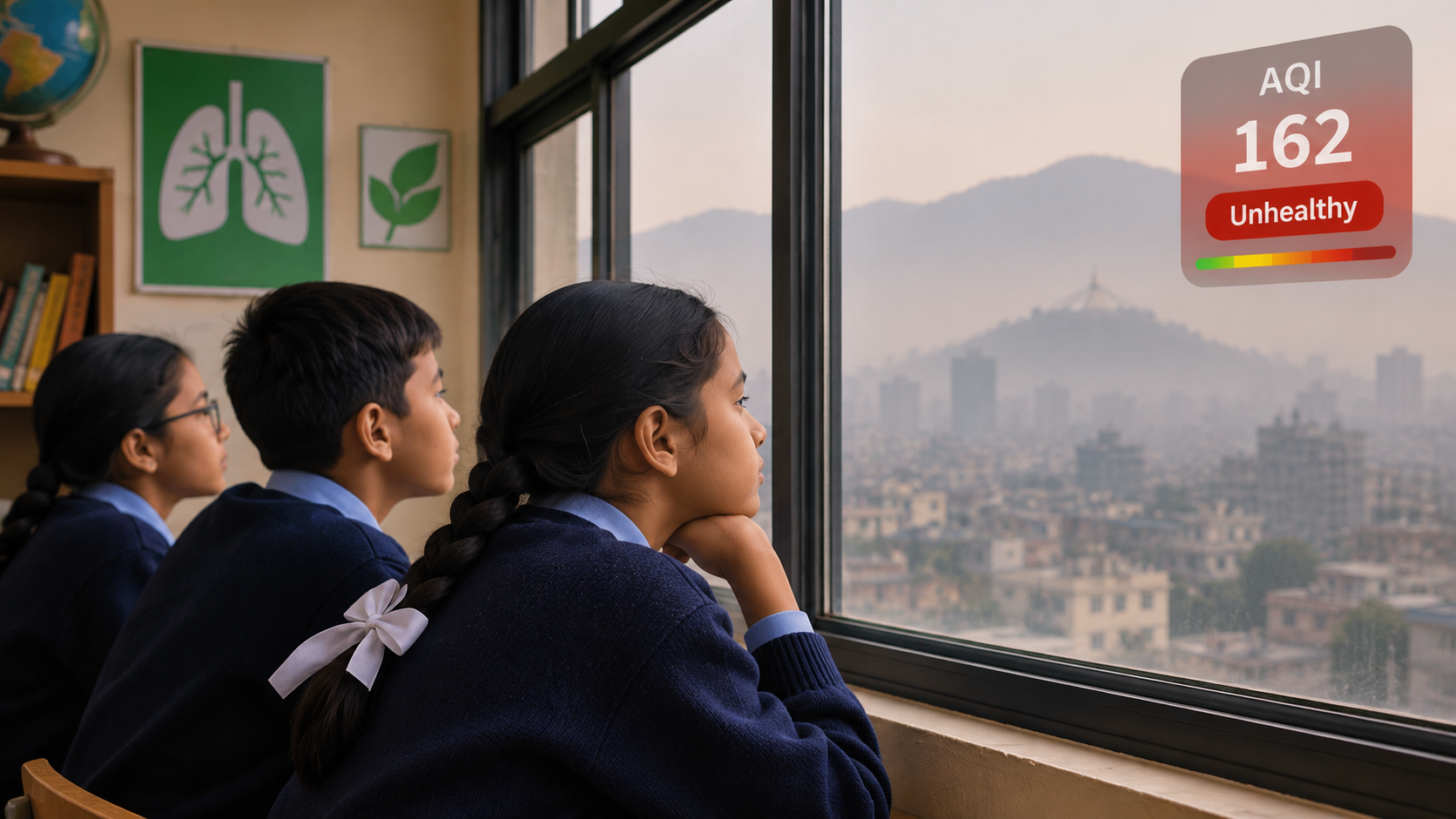
Imagine a school in Kathmandu preparing for its morning assembly. Before students arrive, a teacher checks the local Air Quality Index and finds that the AQI has reached 165, classified as "Unhealthy" under the US EPA scale.
Instead of conducting the assembly and physical education classes outdoors, the school moves these activities indoors, reduces unnecessary outdoor exposure, and informs teachers about additional precautions for students with respiratory conditions.
The school also uses the opportunity to teach students what the AQI means, why pollution levels change, and how they can use environmental information to protect themselves and their families.
This hypothetical example illustrates how access to air-quality information can help schools make practical decisions without requiring expensive infrastructure.
By incorporating daily AQI checks into routine school operations, schools in Kathmandu and other pollution-affected communities can become better prepared for unhealthy air conditions.
Now act
Practical recommendations
- Monitor air quality daily: Check local AQI before school begins and monitor changes throughout the day.
- Adjust outdoor activities: Reduce strenuous outdoor exercise when pollution reaches unhealthy levels. Move activities indoors or reschedule them when necessary.
- Improve indoor air quality: Limit outdoor pollution entering classrooms during severe episodes, use suitable air filtration where possible, and maintain adequate ventilation.
- Protect vulnerable students: Give additional attention to children with asthma and respiratory conditions.
- Communicate with parents: Share air-quality alerts and explain precautions being taken.
- Educate students: Teach children to understand AQI, identify pollution sources, and reduce their exposure.
- Develop an action plan: Establish clear responsibilities and procedures for responding to poor-air days.
Sources and methodology
This article presents evidence-informed recommendations based on guidance from the World Health Organization (WHO), the United States Environmental Protection Agency (EPA), and established air-quality management practices. The recommendations focus on reducing students' exposure to outdoor and indoor air pollution through monitoring, activity adjustments, ventilation, filtration, and environmental education. **Limitations:** Air quality can vary significantly between locations, times of day, and individual classrooms. Public monitoring stations may not represent conditions at every school, while low-cost sensors can have measurement uncertainties. AQI categories also differ across national systems. The recommendations should therefore be adapted to local conditions, available resources, government advisories, and individual student health needs. This article does not represent a school-specific exposure assessment or medical evaluation.
Continue learning
Related action guides
 Air Quality 101
Why Air Quality Changes from Street to Street in Kathmandu
A single citywide AQI can hide important differences between busy roads, residential lanes and open spaces. Discover what creates Kathmandu’s hyperlocal pollution hotspots.
 Air Quality 101
Understanding PM2.5 and Its Impact on Health
Learn about the invisible threat of PM2.5 particles and how they affect your respiratory system.
 Air Quality 101
What AQI Is Safe for Walking, Running and Outdoor Exercise?
Use AQI, activity intensity, health status, location and timing to decide when to walk, run, cycle or move exercise indoors.