What AQI Is Safe for Walking, Running and Outdoor Exercise?
Use AQI, activity intensity, health status, location and timing to decide when to walk, run, cycle or move exercise indoors.

In this article
Understand first
Three things this evidence means for you
- 1Hard exercise increases breathing rate and total inhaled air, which can increase the pollution dose reaching the lungs.
- 2The safer choice depends on AQI, the dominant pollutant, duration, intensity, location, symptoms, age, and existing health conditions.
- 3Reducing intensity, shortening the session, moving away from traffic, or exercising in cleaner indoor air can preserve activity while reducing exposure.
Why exercise changes pollution exposure
Exercise is valuable for physical and mental health, but vigorous activity makes you breathe faster and more deeply. More air moves through the respiratory system each minute, so the inhaled dose of pollution can rise when concentration and exercise intensity are both high.
Dose is not determined by AQI alone. A short walk on a quiet route can produce a different exposure from a long, hard run beside congested traffic, even under the same city-wide category.
A practical AQI decision ladder
When air is in a lower-risk category, most healthy people can usually continue normal outdoor activity. As AQI rises, sensitive people should reduce prolonged or strenuous exertion first. At higher categories, everyone should progressively shorten activity, lower intensity, move indoors where air is cleaner, and follow official alerts.
Different AQI systems use different breakpoints, so use the health message displayed by the platform rather than memorizing one number without its standard.
Walking versus intense exercise
Walking, gentle cycling, mobility work, and shorter intervals generally require less ventilation than continuous hard running or competitive sport. Replacing intensity can lower inhaled dose while preserving movement. It is not a guarantee of zero exposure, especially when pollution is severe.
Who should act earlier?
Medication changes and individual exercise limits should come from a qualified clinician. Carry prescribed reliever medication according to your action plan and do not use a general AQI article as a substitute for care.
- Children and teenagers
- Older adults
- Pregnant people
- People with asthma, COPD, cardiovascular disease, or recent respiratory illness
- Anyone who repeatedly develops symptoms when air quality worsens
Location, timing and traffic
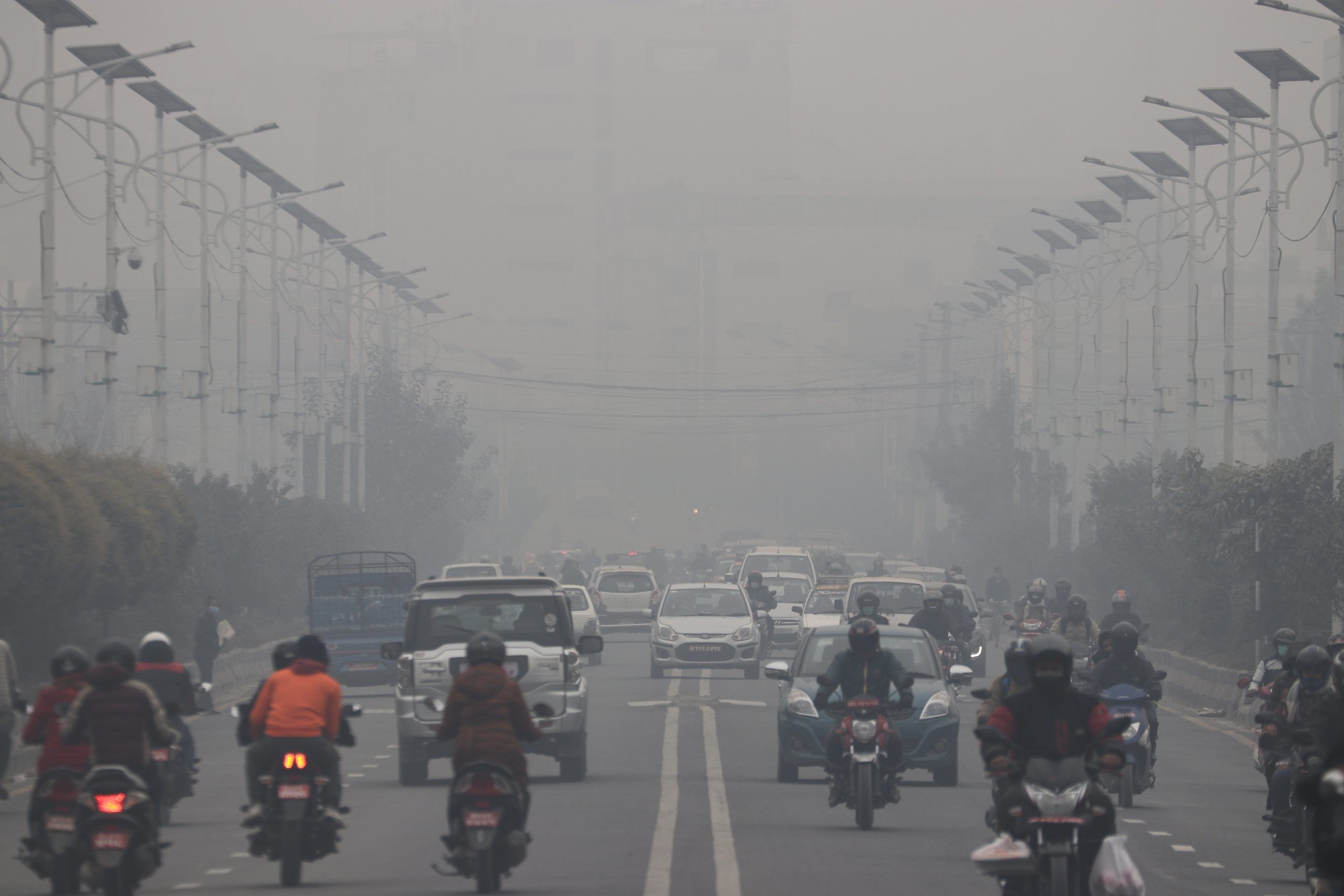
Air pollution can be higher near busy roads, idling vehicles, dust, burning, and generators. Select a route with less traffic and more separation from direct sources. Use the hourly trend to find a potentially cleaner window, but verify the live reading because forecasts can change.
Indoor alternatives that still need clean air
Indoor exercise is helpful only when indoor air is cleaner. Avoid rooms with tobacco smoke, incense, unvented combustion, active frying, or outdoor smoke entering through open windows. Proper ventilation during cleaner periods and correctly sized particle filtration can improve the space.
The two-minute pre-exercise checklist
- What is the current AQI and dominant pollutant?
- When and where was the reading updated?
- Is the trend improving or worsening?
- How hard and how long will I exercise?
- Can I choose a cleaner time, route, or room?
- Do my symptoms or medical plan tell me to stop?
Local context
Planning a run in Kathmandu
A runner planning a 45-minute session should compare current conditions with the next few hours, not assume that every morning is cleaner. If PM2.5 is elevated beside a traffic corridor but expected to fall later, a shorter walk on a quieter route or an indoor workout may reduce exposure. The decision should be checked again immediately before the session.
Now act
Practical recommendations
- Check AQI, dominant pollutant, location, timestamp, and hourly trend before exercise.
- Prefer lower-intensity movement when air is elevated, such as walking instead of hard running.
- Shorten the session to reduce total inhaled dose.
- Choose parks, side streets, or indoor spaces away from direct traffic emissions.
- Stop and move to cleaner air if you develop wheezing, chest tightness, unusual breathlessness, dizziness, or significant irritation.
- People with asthma or heart disease should follow an individualized action plan from a clinician.
Sources and methodology
This article adapts public activity guidance from AirNow and EPA into a decision framework for Nepal. AQI categories communicate population-level risk and cannot determine an individual's medical safety. Exercise and pollution both affect health, so recommendations emphasize adjusting rather than automatically eliminating activity.
- 1.Air Quality Index guide to health: AirNow
- 2.Air quality and outdoor activity guidance: AirNow
- 3.Health effects of air pollution: World Health Organization
Continue learning
Related action guides
 Air Quality 101
Why Air Quality Changes from Street to Street in Kathmandu
A single citywide AQI can hide important differences between busy roads, residential lanes and open spaces. Discover what creates Kathmandu’s hyperlocal pollution hotspots.
 Our Research
Kathmandu Air Pollution: Causes, Seasons and Health Effects
Understand why Kathmandu's air becomes polluted, who faces the greatest risk, and which practical actions can reduce exposure today.
 Air Quality 101
When Should You Wear an N95 Mask for Air Pollution?
Compare cloth, surgical, KN95 and N95 masks for particle pollution, and learn how fit, facial hair and replacement affect protection.