Does Rain Reduce Air Pollution? Nepal’s Monsoon Effect Explained
Learn how rain removes particles, why light rain may not fix pollution, and how humidity can affect air-quality readings in Nepal.
In this article
Understand first
Three things this evidence means for you
- 1Rain can capture airborne particles and bring them to the surface through wet deposition, but the effect depends on intensity, duration, particle size, wind, and continuing emissions.
- 2Sustained monsoon rain often improves particle pollution more than brief drizzle, while conditions can worsen again after surfaces dry or emissions accumulate.
- 3High humidity can influence some optical low-cost particle sensors, so a surprising spike should be checked against nearby observations and weather context.
How rain removes air pollution
Raindrops collect particles and some soluble gases as they form and fall. This process, called wet deposition, transfers pollution from the atmosphere to land and water. The removal rate depends on the pollutant and the structure of the rain event.
Why monsoon air often looks cleaner
Frequent, sustained rain can repeatedly wash particles from the air and wet dusty surfaces so they are less easily resuspended. Monsoon circulation and stronger mixing can also change which air masses reach a location. Together these factors often lower seasonal particle averages.
The monsoon is not pollution-free. Traffic, industries, household combustion, generators, indoor sources, and transported pollution continue, and ozone or other pollutants may follow different patterns from particles.
Light rain versus sustained rain
A brief drizzle may remove some particles but may be too short to create a large or lasting improvement. Sustained rain usually offers more time for removal and surface wetting. A strong storm can also bring gusts that raise dust before rain begins or transport pollution from another area.
Why air can look worse before rain
Stable, humid conditions can precede a storm, and pollution may accumulate before winds shift. Hygroscopic particles take up water and grow at high relative humidity, which can increase haze and affect how light is scattered even before rainfall removes them.
Humidity and low-cost sensor readings
Many lower-cost PM sensors estimate particle mass from light scattered by particles. Water uptake at high humidity can change particle size and optical response, sometimes biasing readings unless correction and quality control account for it. The effect depends on sensor design and aerosol type.
This does not mean every humid reading is false. Compare the pattern with nearby instruments, meteorology, and known sources. Transparent platforms should label corrections and uncertainty.
What happens after the rain stops
Post-rain air can offer a good outdoor window, but the benefit can fade. Emissions rebuild, wet surfaces dry, traffic resuspends dust, and changing winds alter transport. Check the current reading and forecast rather than relying on how the sky looks.
How weather improves VayuDrishti forecasts
Rainfall, wind, boundary-layer mixing, humidity, and temperature help explain how pollution will disperse, form, or be removed. VayuDrishti combines air-quality evidence with weather context so a forecast can answer a practical question: when is the cleaner window for this location and activity?
Local context
Before, during and after a Kathmandu rain event
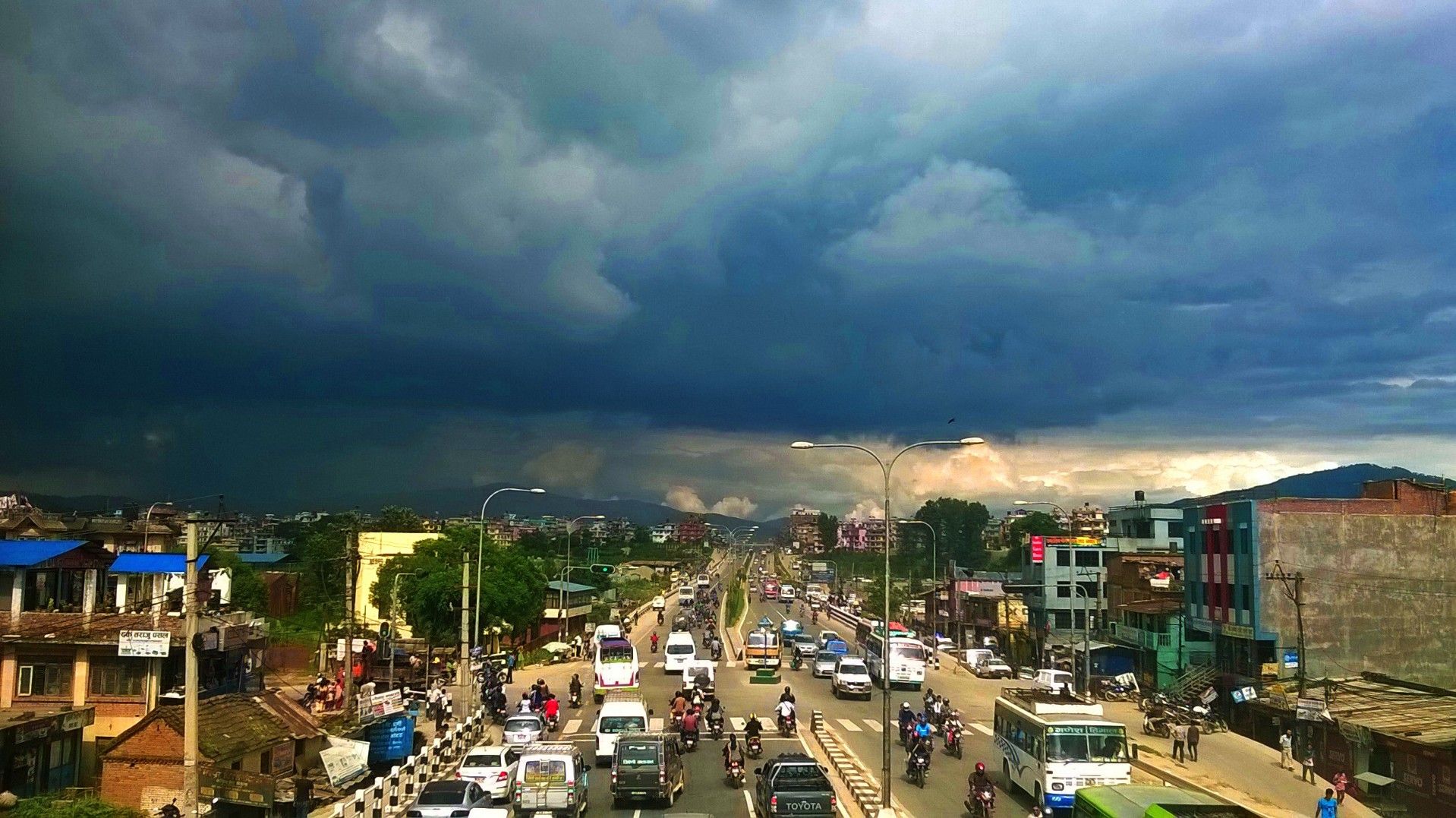
Dust may rise in gusty winds before a storm, followed by lower particle readings during sustained rain. A short shower may produce only temporary improvement. After rain ends, cleaner air can persist if wind and emissions remain favorable, or pollution can rebuild as traffic continues and roads dry.
Now act
Practical recommendations
- Check the live trend after rain instead of assuming the air is clean.
- Compare PM2.5, PM10, humidity, wind, and update time when a reading changes sharply.
- Use a cleaner post-rain window for outdoor activity only after current data confirms improvement.
- Keep drainage and wet-road safety in mind when changing travel plans.
- Do not open windows during rain if outdoor smoke, high humidity, mold risk, or unsafe heat makes ventilation inappropriate.
- Treat one low-cost sensor spike cautiously when nearby sources and stations do not show the same pattern.
Sources and methodology
This explainer applies established atmospheric removal processes and sensor-quality guidance to Nepal's monsoon cycle. It avoids claiming that rain always improves AQI because pollutant type, rainfall, wind, emissions, and measurement method vary. Local observations should decide daily action.
- 1.WHO global air quality guidelines: World Health Organization
- 2.Air sensor guidebook: US Environmental Protection Agency
- 3.Air quality trends of the Kathmandu Valley: ICIMOD
Continue learning
Related action guides
 Climate Action
How Forest Fires Affect Nepal’s Air Quality
Understand when and how forest-fire smoke reaches communities in Nepal, what PM2.5 means for health, and how to reduce exposure.
 Climate Action
Community-Led Air Quality Initiatives
Explore practical community projects that help residents understand and improve local air quality.
 Air Quality 101
Why Air Quality Changes from Street to Street in Kathmandu
A single citywide AQI can hide important differences between busy roads, residential lanes and open spaces. Discover what creates Kathmandu’s hyperlocal pollution hotspots.