How Do Air-Quality Sensors Work, and How Accurate Are They?
Learn how low-cost and reference monitors measure pollution, why nearby sensors differ, and how calibration and quality control improve data.
In this article
Understand first
Three things this evidence means for you
- 1Reference-grade instruments are designed for regulatory-quality measurement, while lower-cost sensors trade some certainty for wider spatial and temporal coverage.
- 2Humidity, aerosol type, temperature, placement, aging, dirt and component variation can make nearby sensors report different values.
- 3Co-location, calibration, range checks, maintenance, transparent corrections and uncertainty labels make sensor data more useful without making it perfect.
Reference monitors versus lower-cost sensors
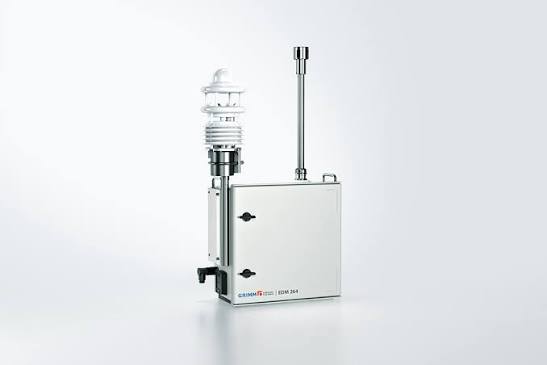
Reference and equivalent methods use specified instruments, procedures, siting, calibration, maintenance, and quality systems to support regulatory decisions. Instruments such as beta attenuation monitors, or BAMs, and gravimetric methods measure particulate matter using well-defined approaches. Research-grade optical instruments, including devices from GRIMM and other manufacturers, are often used for detailed particle measurements and evaluation.
Lower-cost sensors make dense neighborhood networks and real-time community information more affordable. Their data can be excellent for trends, source discovery, education, and supplementary mapping when the system is designed and evaluated for that purpose.
How optical PM sensors estimate particles
Many PM sensors pull air through a small chamber and shine light across it. Particles scatter the light, and the detector uses that signal plus assumptions about particle size, shape, density, and optics to estimate particle number or mass.
Because the instrument does not directly weigh every collected particle, its estimate can change with aerosol composition and humidity. Smoke, urban aerosol, and mineral dust may produce different responses at the same true mass concentration.
Gas, temperature and humidity sensors
Compact gas sensors may use electrochemical, metal-oxide, or other sensing principles. They can respond to temperature, humidity, interfering gases, and baseline drift. Temperature and relative humidity are also measured because meteorology shapes pollution and helps interpret sensor behavior.
Accuracy, precision and reliability
- Accuracy describes closeness to an accepted reference
- Precision describes how consistently repeated measurements agree
- Bias is a systematic high or low difference
- Completeness describes how much expected data was successfully captured
- Reliability includes stable operation, maintenance, power, communications, and metadata
Why nearby sensors show different values
Real air pollution varies over short distances near roads, cooking exhaust, generators, construction, waste burning, and wind channels. Placement differences can be as important as instrument differences. Even co-located units may disagree because of manufacturing variability, dirt, inlet blockage, moisture, aging, clock drift, or a failing component.
Calibration and co-location
Co-location means operating a sensor beside a quality-assured reference instrument under the conditions where it will be used. The paired data reveal bias and support a correction equation. Evaluation should cover a useful range of concentrations and weather, then be repeated to detect drift.
A correction developed in one city or smoke type may not transfer perfectly to another. Keep the raw measurement, correction version, training dates, performance statistics, and uncertainty traceable.
Quality assurance and outlier removal
Automated checks can flag impossible values, repeated flat lines, sudden jumps, missing data, internal conflicts, and readings outside a defensible physical range. An extreme value should not be deleted only because it is inconvenient. Compare neighboring instruments, logs, weather, known events, and reference data, then preserve an audit trail of the decision.
Raw data are the sensor output before correction. Corrected data apply a documented adjustment. Both labels should be visible, and neither should be presented as exact personal exposure.
What sensor data are suitable for
- Understanding hourly and neighborhood patterns
- Finding potential hotspots for further investigation
- Testing whether a local intervention changed a pattern
- Public information and education with clear uncertainty
- Supplementing, not silently replacing, reference networks
The VayuDrishti data-quality approach
VayuDrishti aims to show source, time, location, validation status, corrections, and limitations beside the decision guidance. Values beyond a defensible range can be withheld from the public map while remaining flagged for technical review. Transparency matters because useful data should empower action without creating false precision.
Local context
Why two sensors on the same Kathmandu road can disagree
One sensor sits beside traffic at street level while another is on a rooftop near a kitchen exhaust. Different airflow and sources can create a real concentration difference. If they remain side by side and still disagree, humidity response, calibration, inlet condition, power, clock alignment, or sensor aging may explain the gap. Co-location with a reference instrument helps separate environmental variation from instrument bias.
Now act
Practical recommendations
- Match the sensor and data-quality target to the question you need to answer.
- Record location, height, nearby sources, airflow, shelter, power, and maintenance history.
- Co-locate sensors with a trusted reference before and periodically during deployment.
- Check clocks, duplicates, missing intervals, impossible values, sudden steps, and flat-lined data.
- Review humidity and temperature when optical PM readings behave unexpectedly.
- Publish raw and corrected data definitions, calibration periods, coverage, and limitations.
Sources and methodology
This guide follows EPA air-sensor quality assurance and co-location principles. It distinguishes lower-cost indicative data from regulatory reference measurements. Specific performance depends on the instrument model, pollutant, environment, correction model, maintenance, and intended use.
- 1.Air sensor guidebook: US Environmental Protection Agency
- 2.Air sensor co-location: US Environmental Protection Agency
- 3.Quality assurance for air sensors: US Environmental Protection Agency
Continue learning
Related action guides
 Technology
How Satellites, Ground Sensors and AI Can Map Air Pollution
See how satellite observations, ground monitors, weather and AI can create high-resolution air-quality maps while keeping uncertainty visible.
 Technology
The Future of Air Quality Monitoring
Explore the technologies changing how communities track and respond to air pollution.
 Air Quality 101
Why Air Quality Changes from Street to Street in Kathmandu
A single citywide AQI can hide important differences between busy roads, residential lanes and open spaces. Discover what creates Kathmandu’s hyperlocal pollution hotspots.